SOC Hub: An Open-Source AI-Powered Case Management Platform
A multi-tenant, AI-assisted SOC case management system built for modern security teams.
The Problem I Kept Seeing
Security teams don’t lack alerts.
They lack structure.
Over the years working across cloud-native environments, crypto infra, MSSP-style operations, and compliance-heavy companies, I kept seeing the same pattern:
- Jira pretending to be a SOC tool
- Slack threads used as incident tracking
- Expensive enterprise platforms nobody fully understands
- Or spreadsheets holding everything together
So I built something I actually wanted to use.
Introducing SOC Hub
SOC Hub is a multi-tenant, AI-powered SOC case management platform designed for real-world security teams.
It focuses on:
- Case lifecycle management
- Artifact & IOC linking
- Investigation mapping
- Auditability
- Privacy-first AI assistance
Security Operations Dashboard
A clean operational overview of your SOC:
- Open vs closed cases
- Critical incidents
- Resolution rate
- Severity distribution
- MTTR tracking
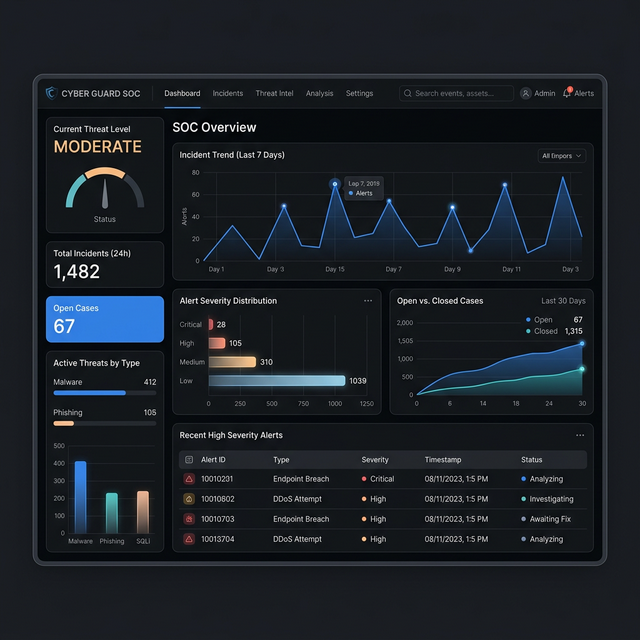
This isn’t just metrics — it’s operational clarity.
Engineering Cases
Cases are first-class citizens.
Each case supports:
- Severity classification
- Status lifecycle
- Artifact linking
- Timestamps
- Updates
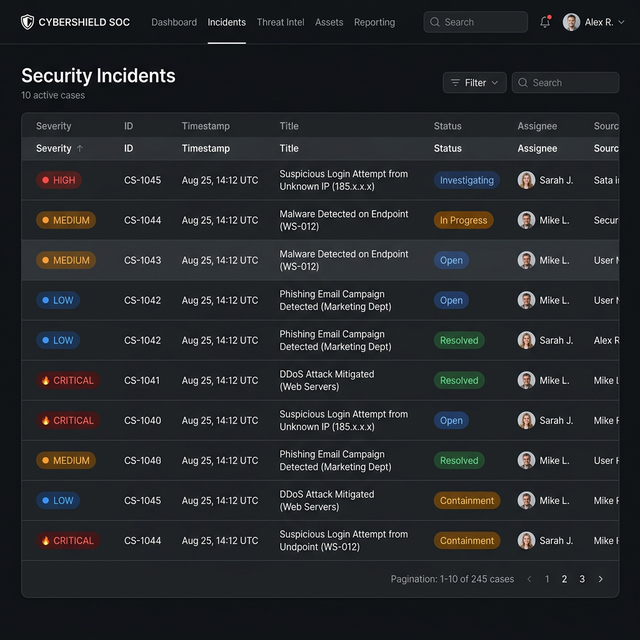
No generic tickets.
Real incident-focused tracking.
Artifact & IOC Repository
Security investigations are about relationships.
SOC Hub provides a centralized repository for:
- Emails
- Domains
- IP addresses
- Evidence
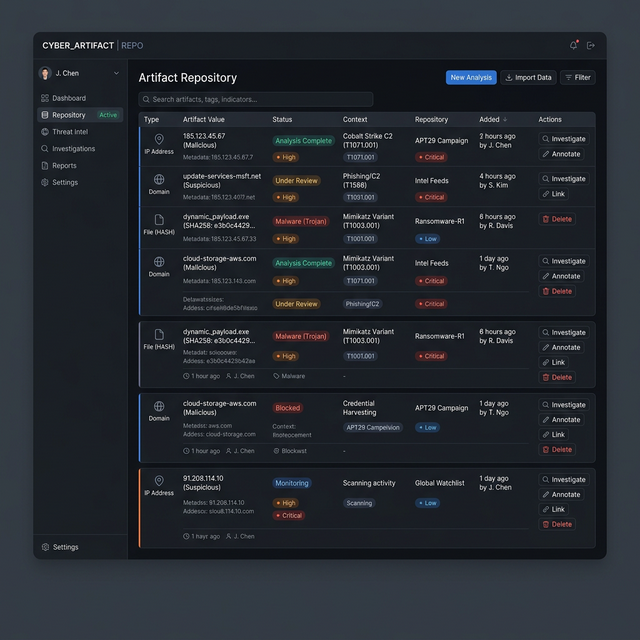
Everything links back to cases.
Nothing lives in isolation.
Relationship Map
Investigations aren’t linear.
They’re graphs.
SOC Hub includes a relationship map to visualize how:
- Cases connect
- IOCs overlap
- Campaign patterns emerge
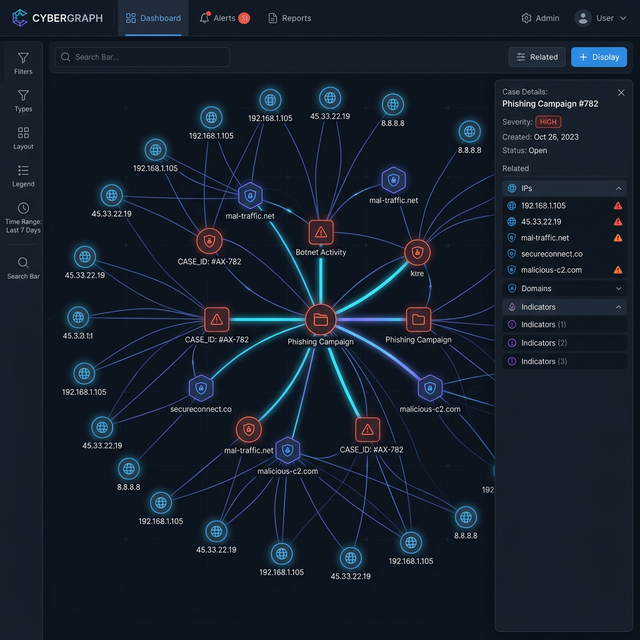
This is where investigations become intelligence.
Multi-Tenant & Role-Based Access
Built for:
- MSSPs
- Multi-entity organizations
- Security consultancies
With strict tenant isolation and role-based permissions.
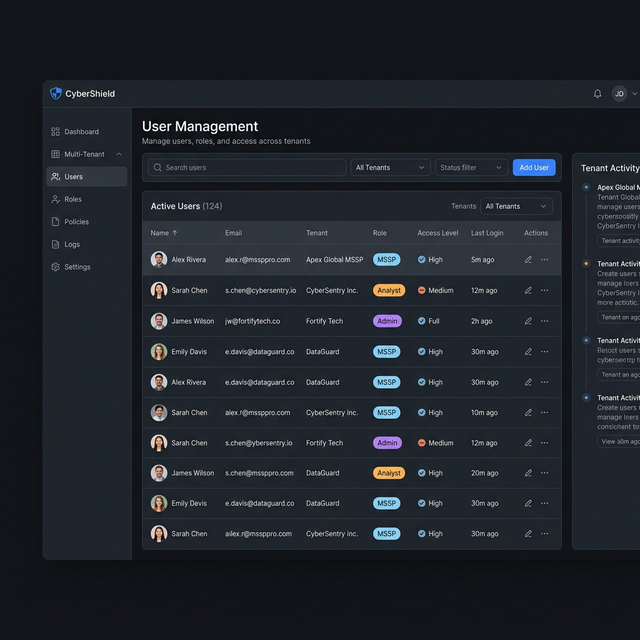
Security isn’t an afterthought.
It’s embedded into the model.
Architecture (For Builders)
This wasn’t hacked together.
Backend
- FastAPI (fully async)
- Async SQLAlchemy
- PostgreSQL (asyncpg)
- Celery + Redis
Frontend
- React 19
- TypeScript
- TanStack Query
- Tailwind CSS
AI
- Ollama for local LLM inference
Fully containerized. Audit logged. Versioned API (v1).
Why Open Source?
Because security tools should be transparent.
Because AI in security shouldn’t require data leakage.
And because the future of security engineering is:
Open.
Composable.
AI-augmented.
Privacy-aware.
If you want early access, testing access, or want to contribute:
Reach out.
Let’s build better security tooling.