·SOC
From Alert to Closed Case Without Leaving sochub
How a threat goes from a SIEM or EDR detection to a contained, documented, closed incident inside one platform — and how to onboard those tools in an afternoon.
8 min readRead
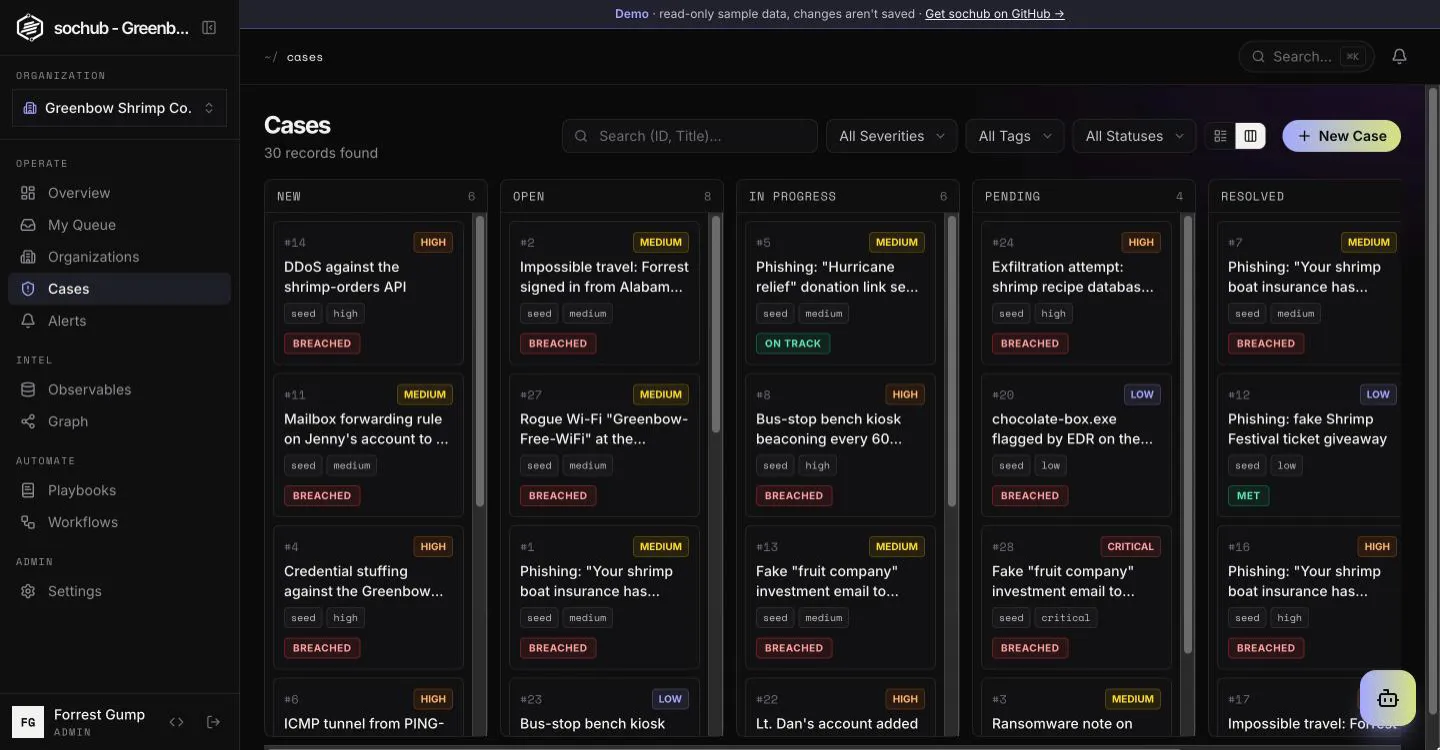
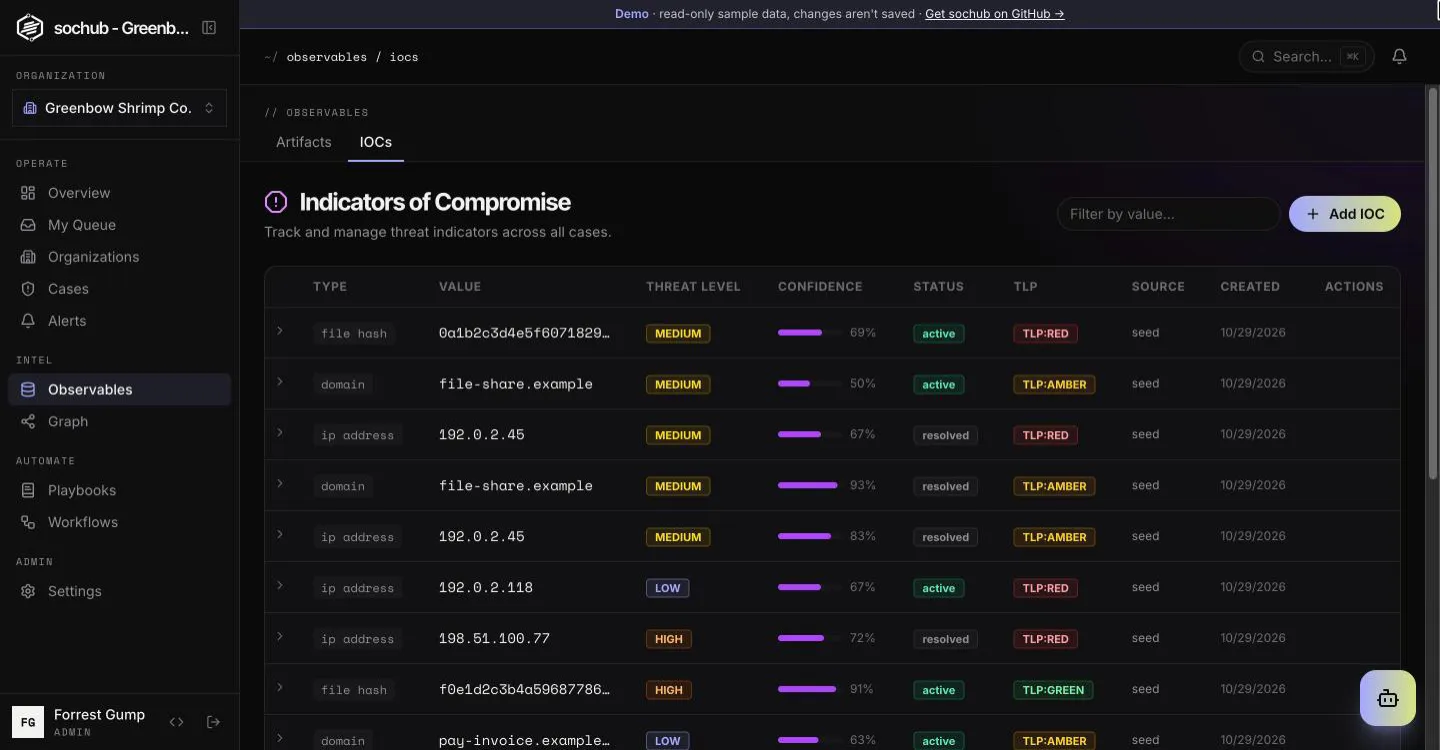
sochub is case management for security incidents. Triage alerts into cases, link IOCs across investigations and run MITRE-mapped playbooks, with an AI copilot on your model that never writes without your confirm. It isn't a SIEM: your SIEM, EDR and email security keep detecting, and sochub is where the incident gets worked.
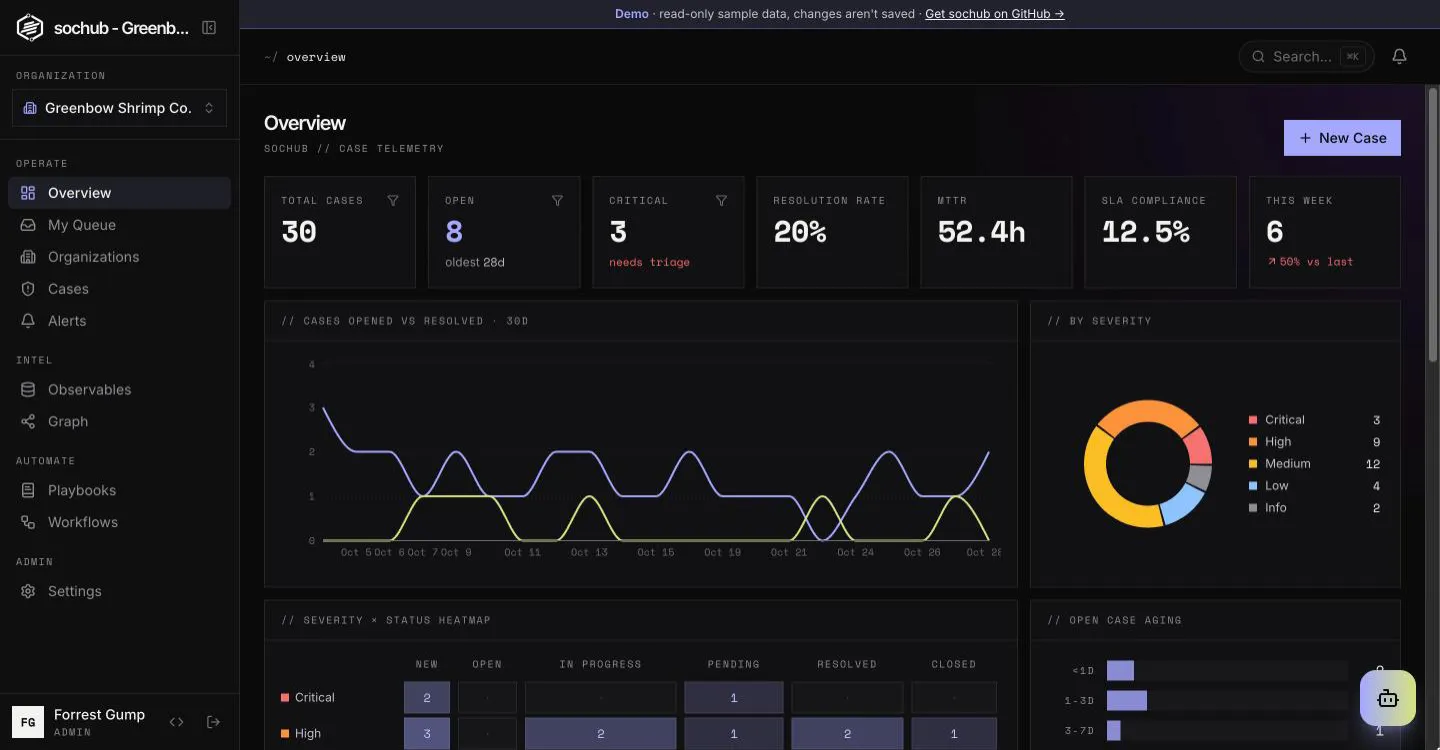
Not a ticketing system wearing a security costume. Cases, artifacts and IOCs are first-class objects that link across investigations.
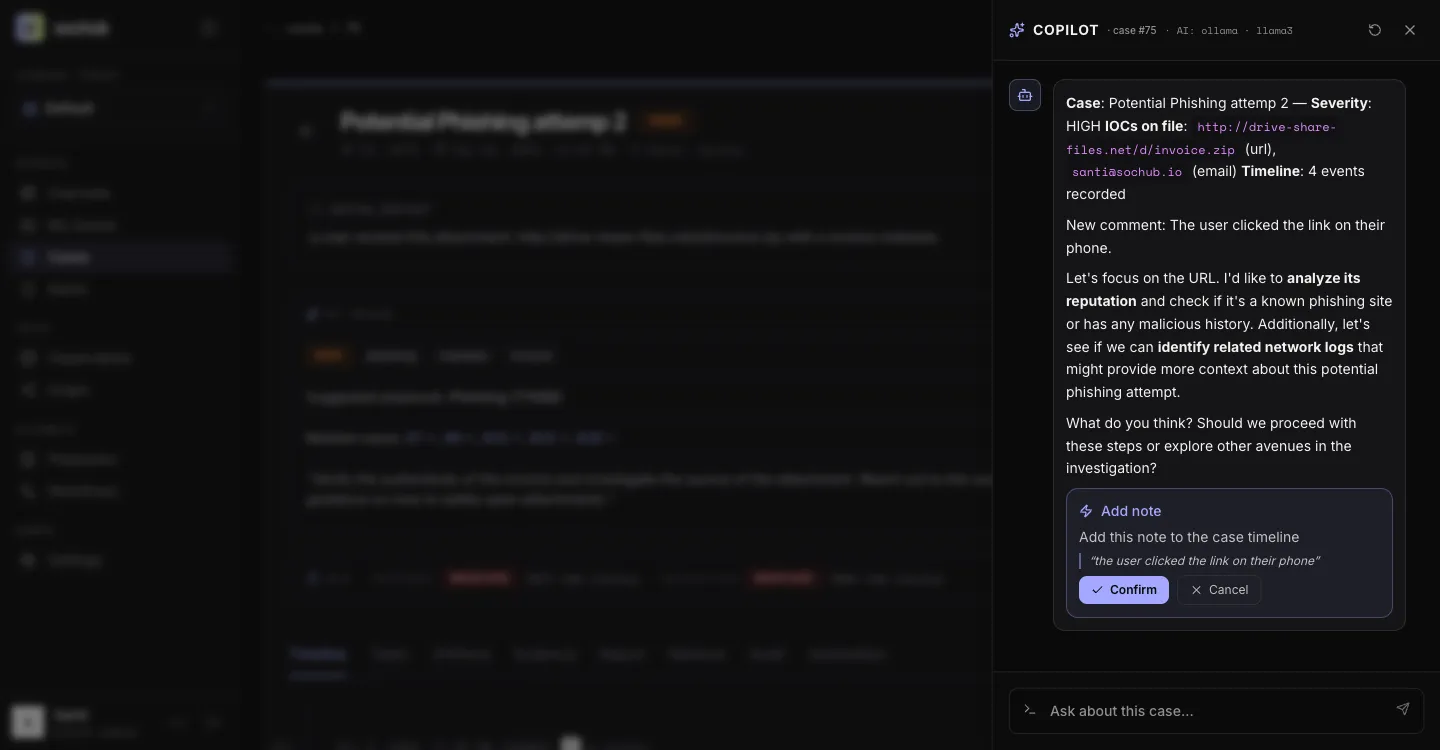
A context-aware assistant on a local Ollama model (or your own provider). It proposes actions; nothing is written until you confirm.
Every new case gets a suggested severity, tags, playbook, related cases and next steps — before an analyst opens it.
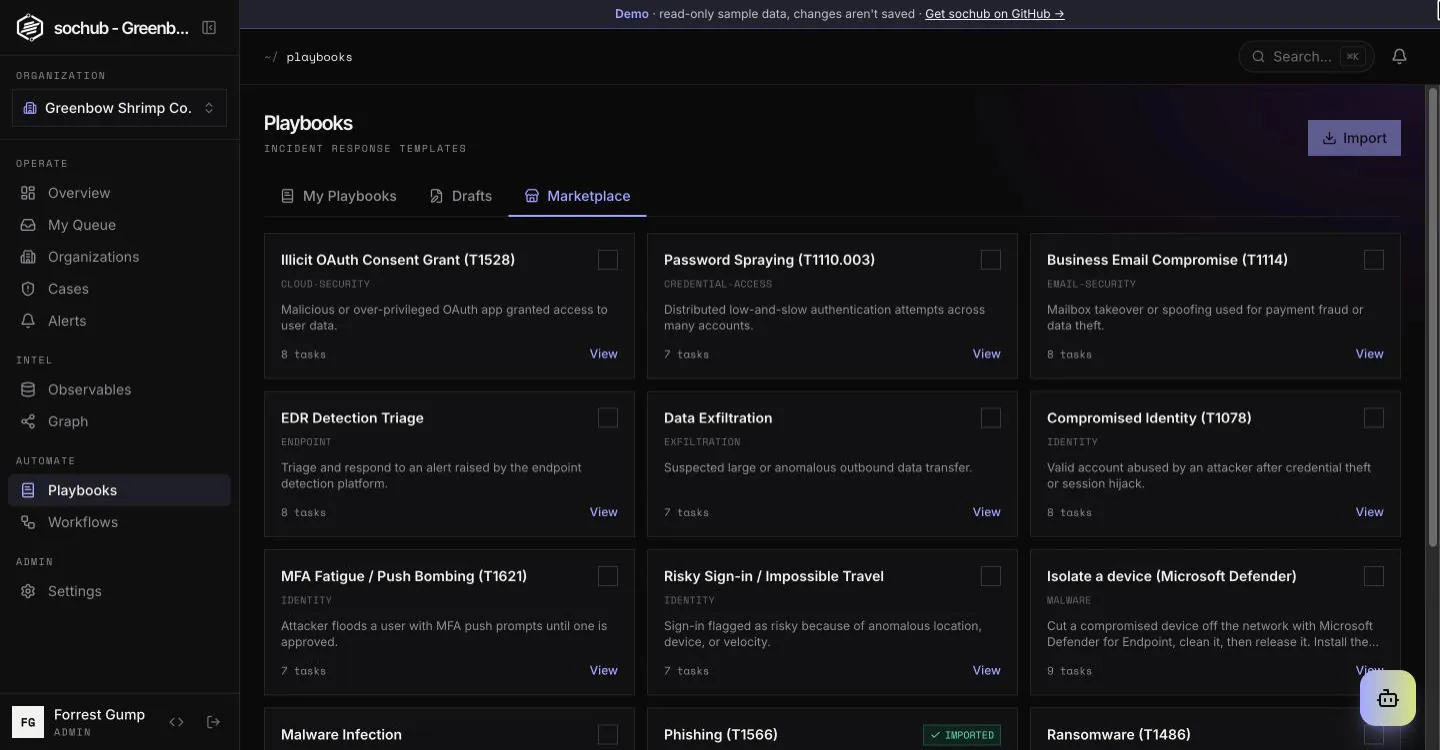
MITRE-mapped IR playbooks fill a case with phase-grouped tasks. Link a task to a workflow: one click runs it, and the result lands on the task.
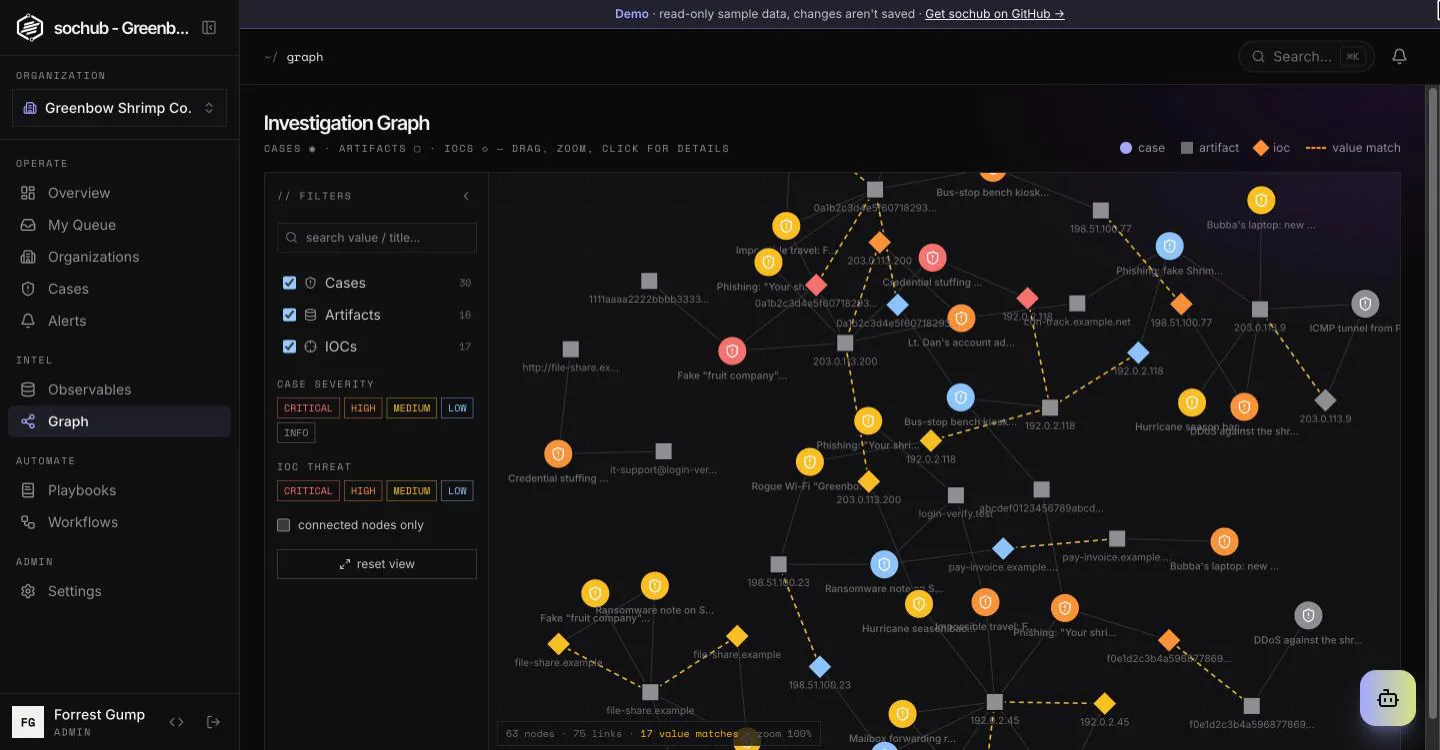
A force-directed map of cases, artifacts and IOCs that surfaces the campaign hiding across "unrelated" cases.
Not a SIEM and not a replacement: sochub doesn't collect logs or run detections. Alerts from your SIEM, EDR and email security arrive by webhook or scheduled pull; the investigation happens here.
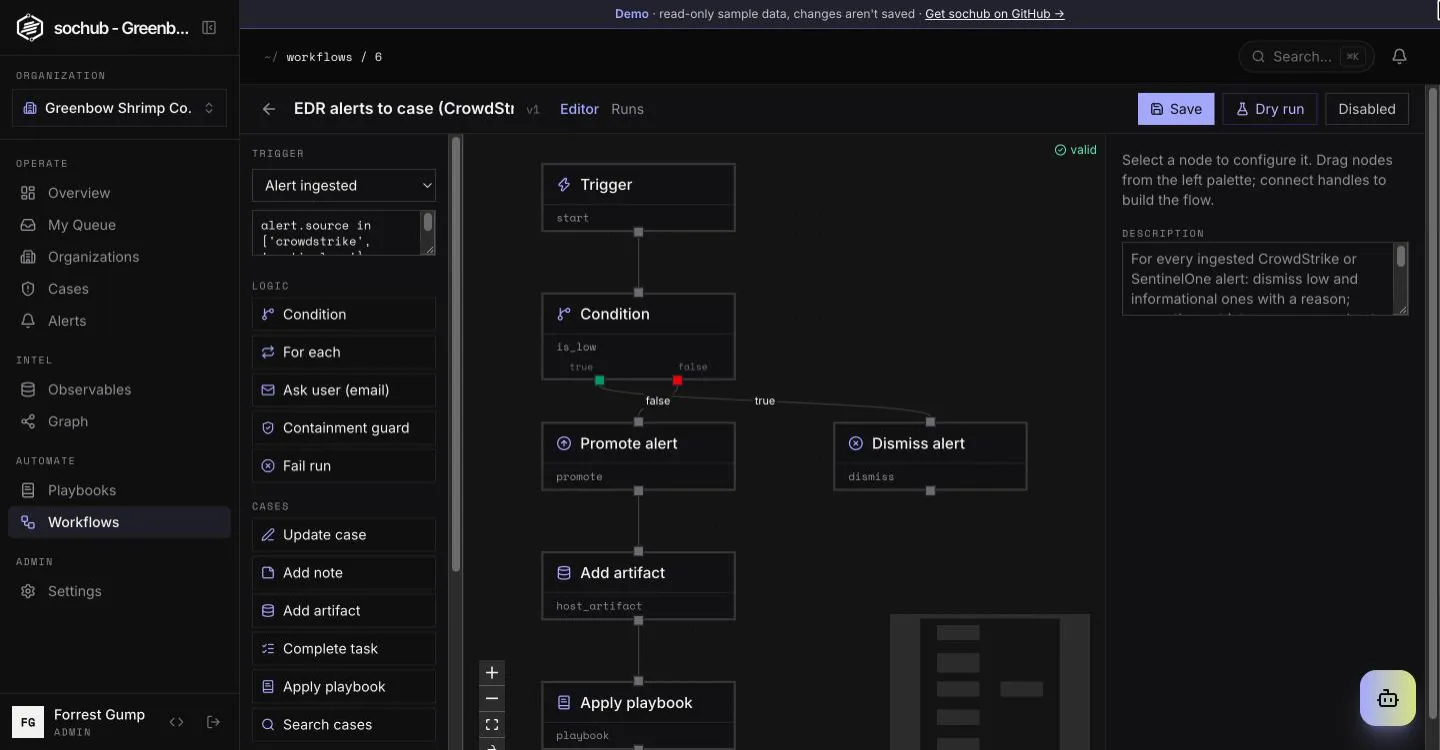
A visual builder with conditions, loops, HTTP calls, "was this you?" over Slack or email, and templates for CrowdStrike, SentinelOne, Okta, Entra and more. Dry-run before you ship.
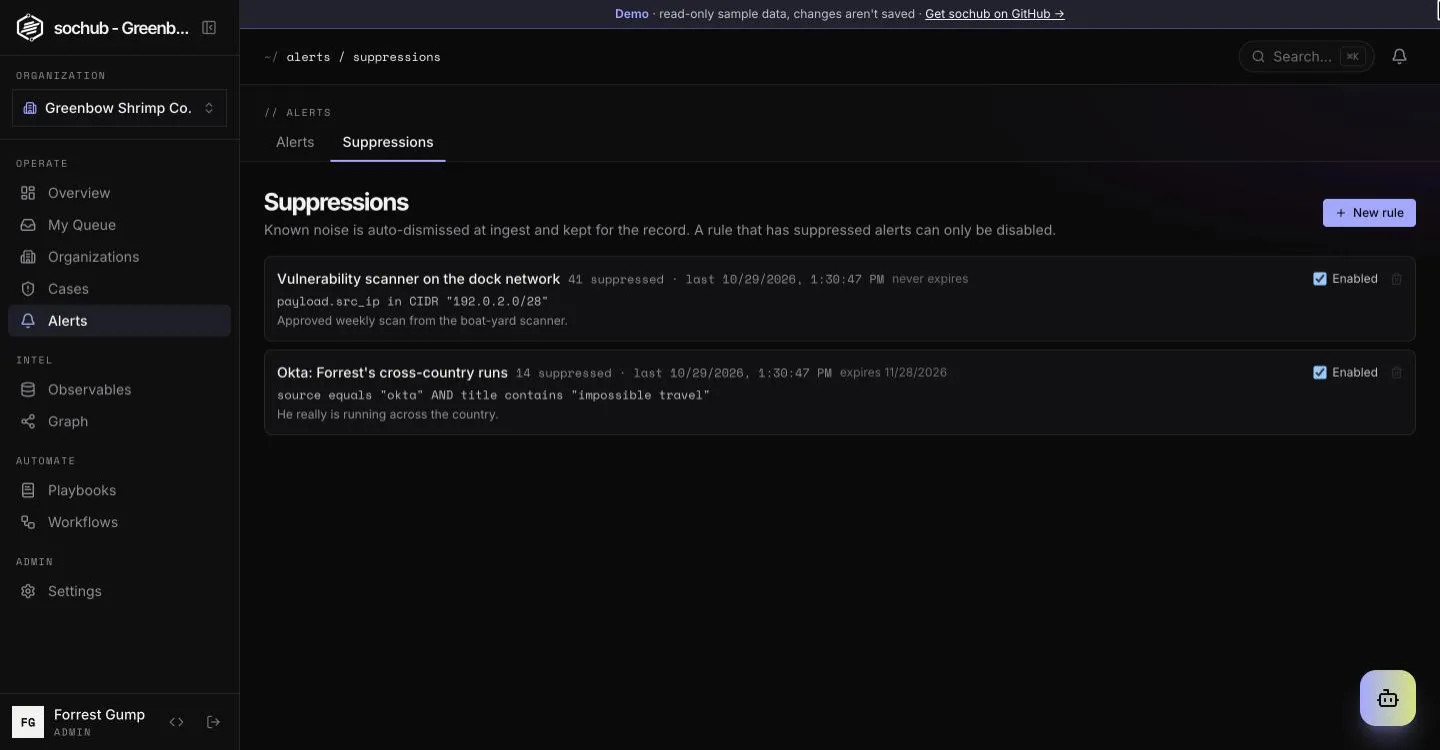
Expiring, auditable rules auto-dismiss known noise at ingest. Preview before saving; "Suppress similar" builds one from an alert.
Jira, HaloPSA and ConnectWise, two-way, per case task: closing the ticket ticks the task, and the task's result goes back to the ticket.
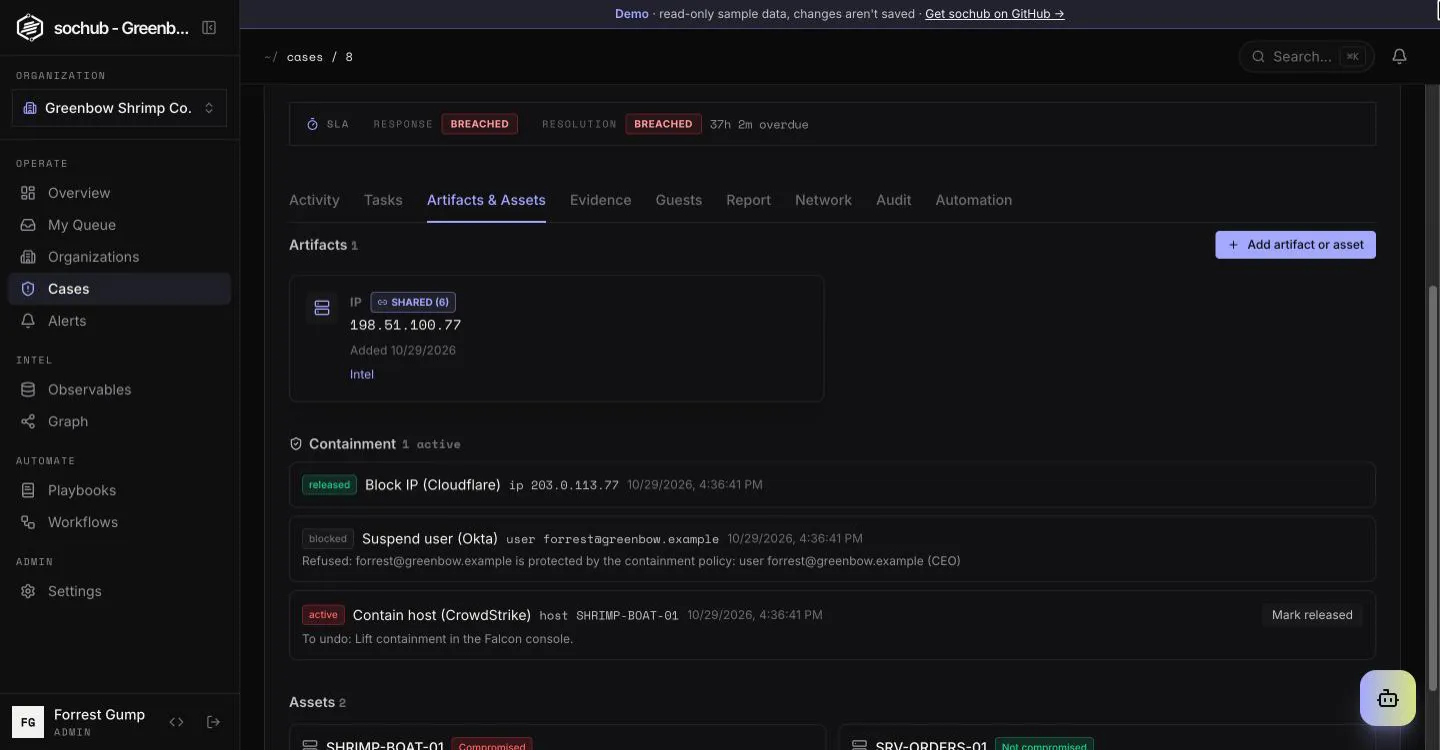
Protected VIPs, servers and ranges, daily and per-case caps, and a release ledger. Automation never contains what it shouldn't.
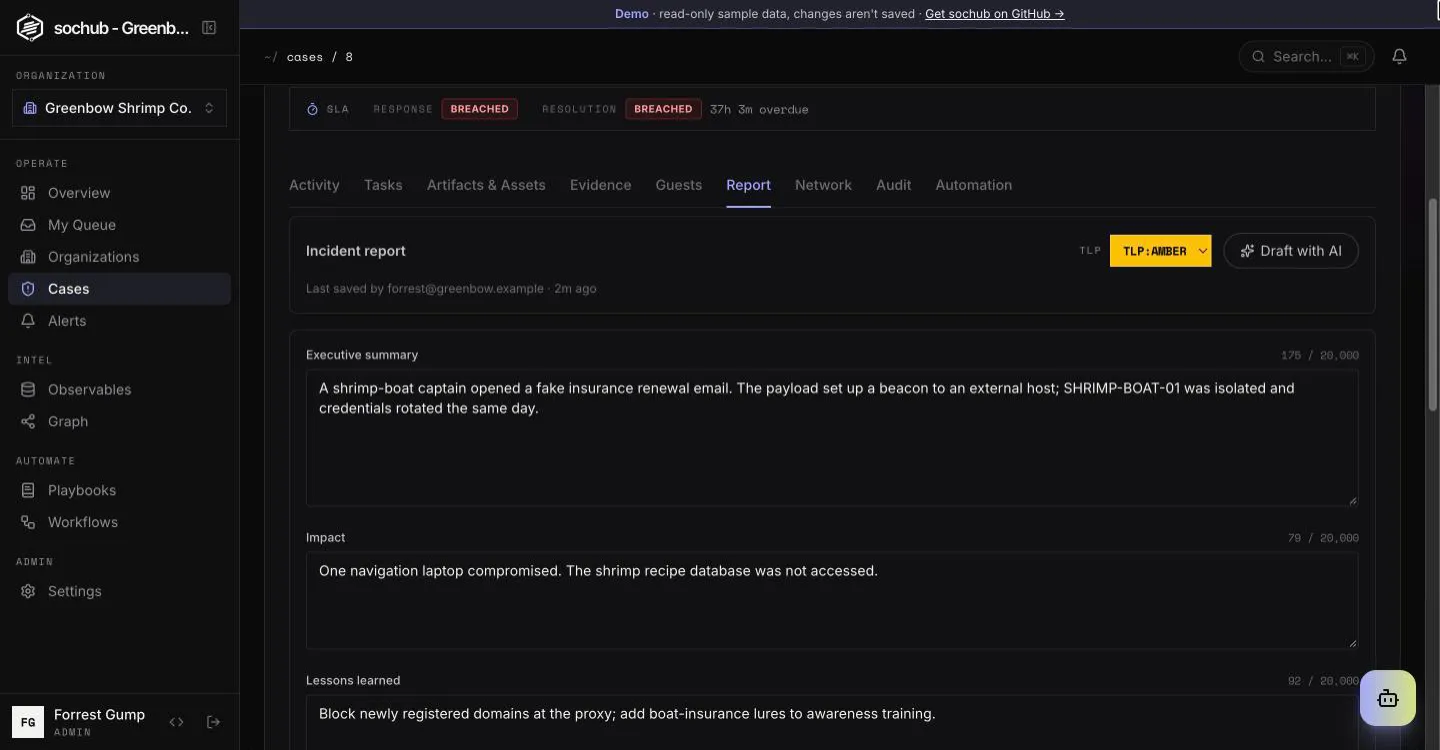
AI-drafted, analyst-edited reports with TTD/TTC/TTR and swimlane timelines. Export to TLP-marked PDF or JSON.
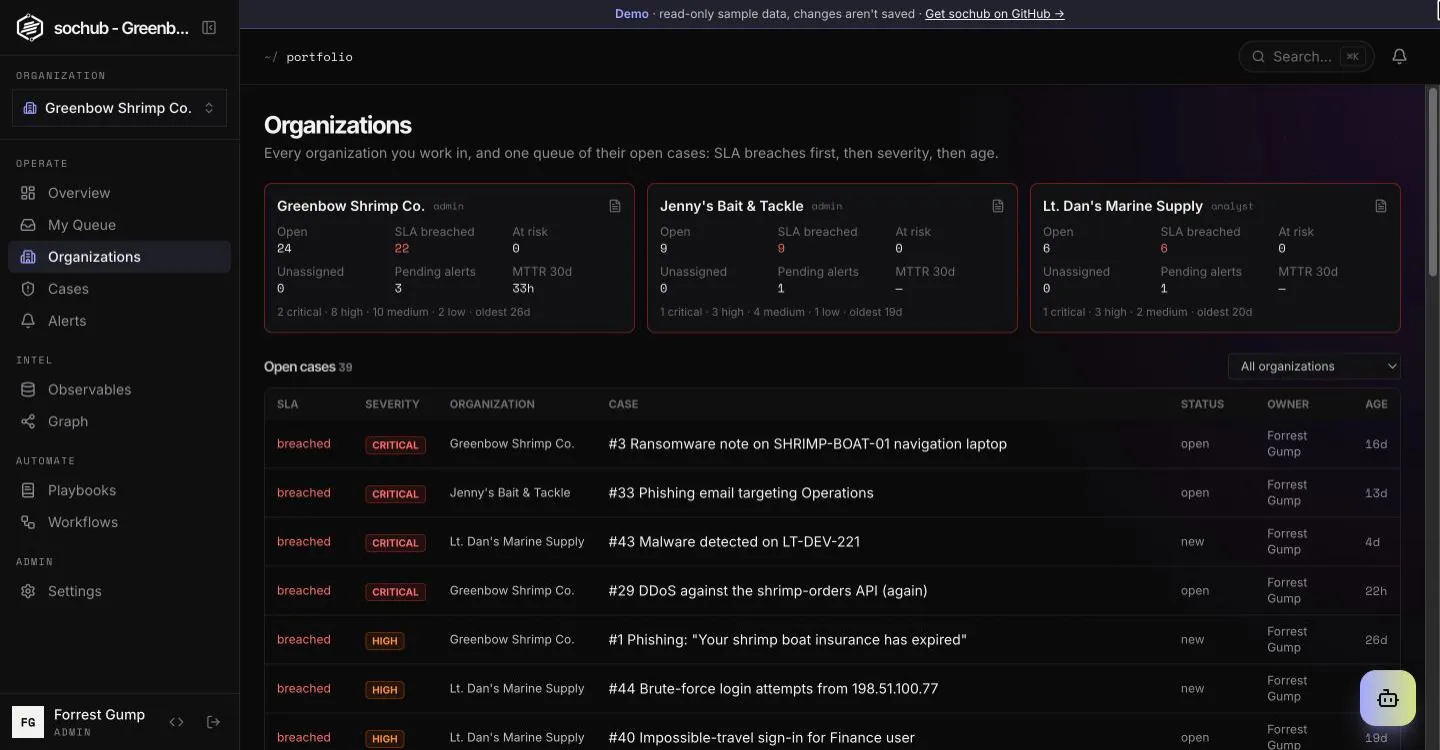
Optional: run several organizations, or keep some departments' incidents apart, each with its own data, roles and SSO. Work in more than one? See them together, with weekly summaries.
Argon2, TOTP MFA, session revocation, host-bound workflow secrets, SSRF guards and full audit logging.
Real screenshots from the current build. Every one of these runs on your own infrastructure.
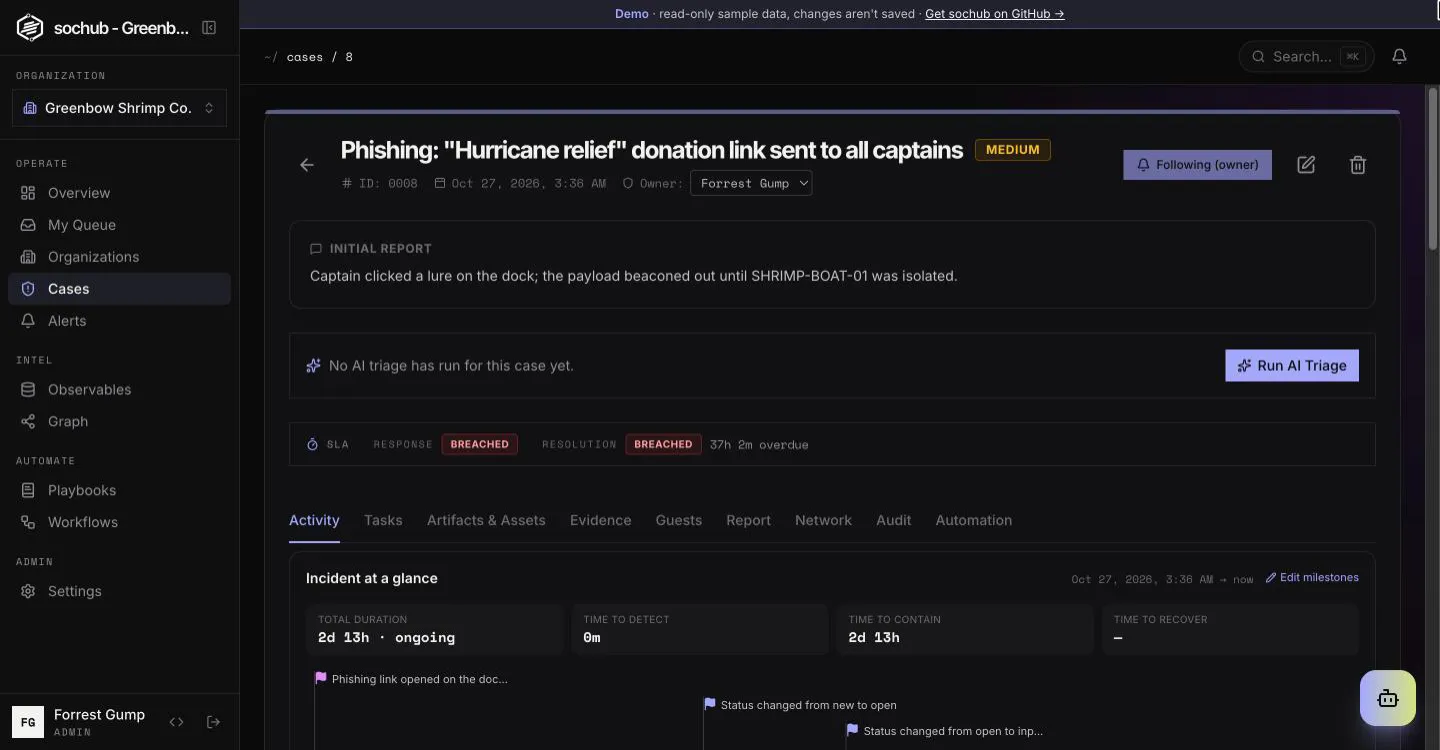
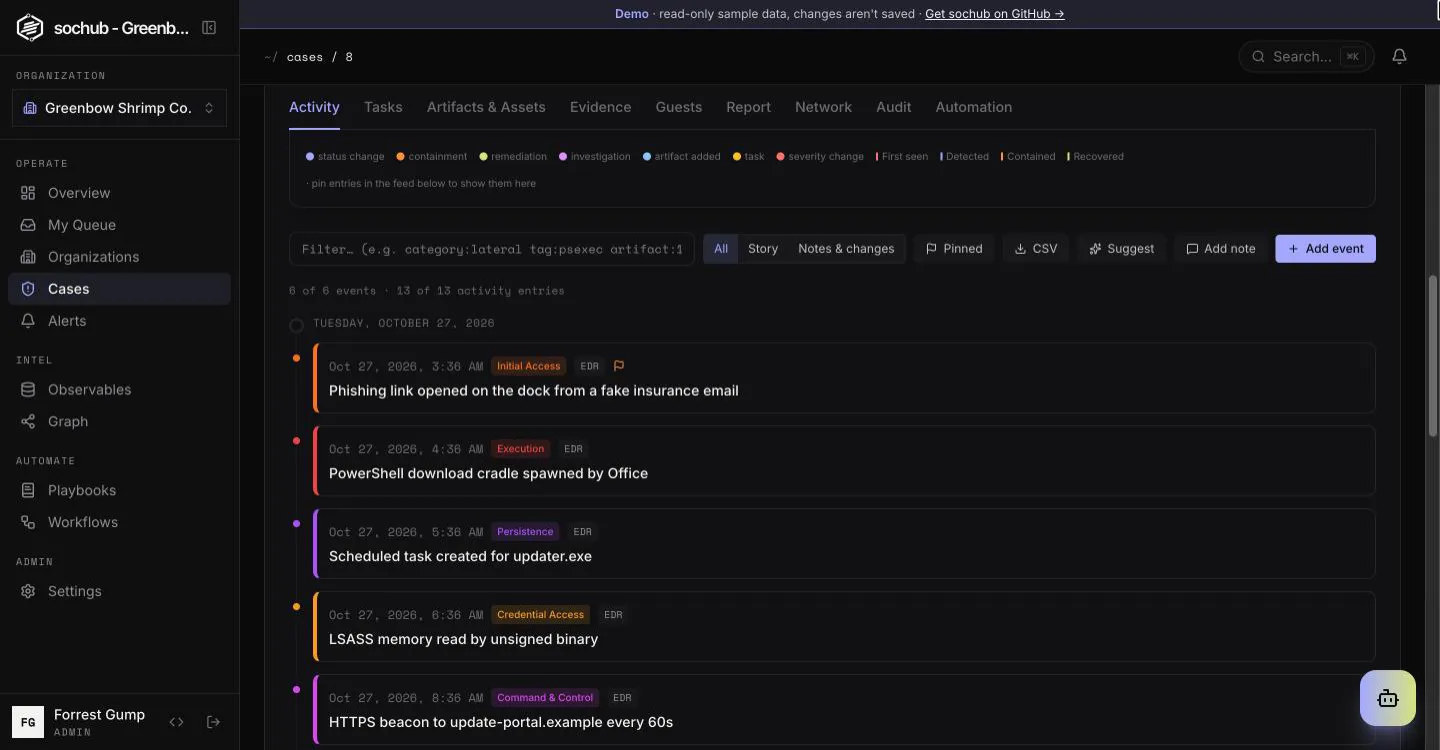
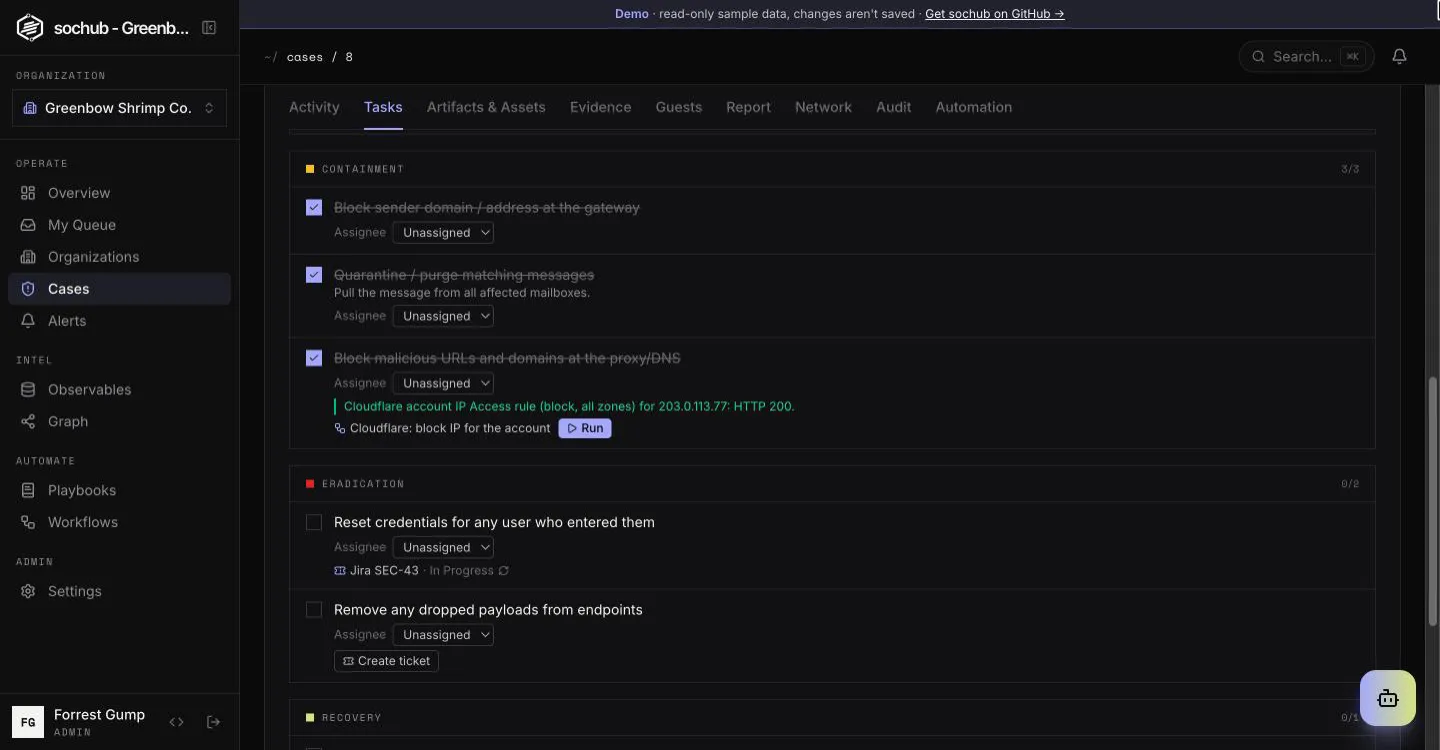
Clone the repo, copy the two .env.example files, and go. Then open http://localhost and sign in.
Going to production? Set ENVIRONMENT=production and strong secrets — the app refuses to boot with defaults. Full guide →
$ docker compose up -d --build$ docker compose exec backend alembic upgrade head$ docker compose exec backend python -m app.scripts.create_super_admin --email admin@example.com --name "Super Admin"sochub is software you install and run on your own infrastructure. There is no hosted or SaaS version, no account to sign up for and no paid tier: you own the data, and you can fork it if the roadmap stops matching yours.
| sochub | SaaS tools | |
|---|---|---|
| Read every line making decisions about your incidents | ||
| Case data, IOCs and prompts stay on your network | ||
| AI on a local model — no third-party API required | ||
| SSO, MFA and multiple organizations, no "enterprise tier" | ||
| Per-seat pricing that grows with your team |
Compared with typical hosted (SaaS) case-management tools. sochub itself is only offered as self-hosted software.
Every feature, on your own servers. Free, forever.
How sochub gets built, and the detection, response and AI-security thinking behind it.
How a threat goes from a SIEM or EDR detection to a contained, documented, closed incident inside one platform — and how to onboard those tools in an afternoon.
What an EDR actually does, explained through a French house anthem about lateral movement and people who log in as admin/password. Also, our marketing team spent three years of budget on it.
sochub is now open source. The latest round was built mostly by describing features in plain English to an AI agent — here's what that actually looked like, including the parts where the vibe broke and judgment had to take over.
Questions, feature ideas, bug reports or "we tried it and here's what broke" — all welcome. Submitting opens a pre-filled GitHub issue so the conversation happens in the open.